
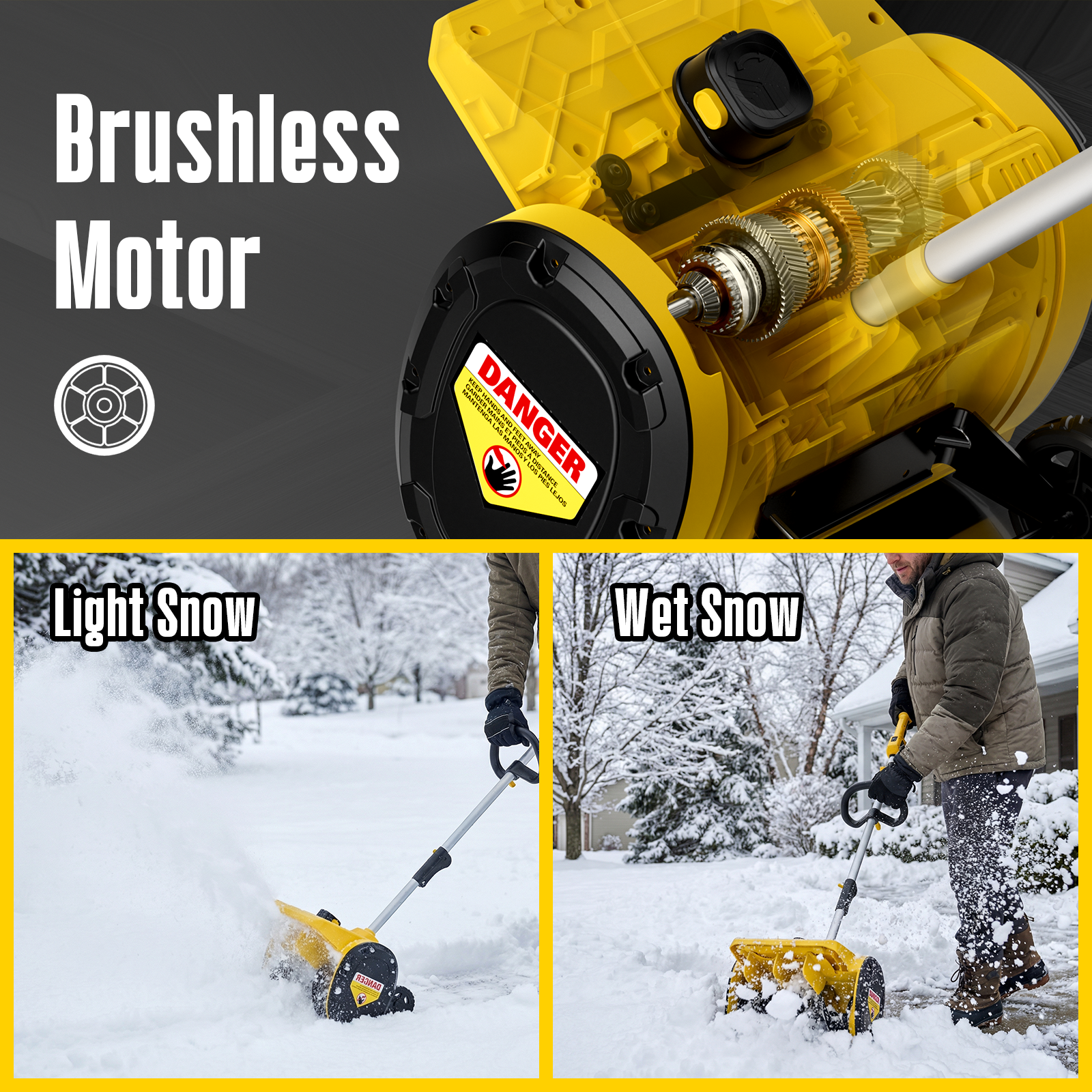
When choosing a cordless tool, many users focus on battery voltage, speed, or accessories. However, the motor inside the tool is one of the key factors that determines performance, efficiency, and durability.
In recent years, brushless DC (BLDC) motors have become increasingly common in cordless power tools, replacing traditional brushed motors in many applications.
What Is a Brushless DC Motor?
A traditional brushed motor uses carbon brushes to transfer electrical current between stationary and rotating parts. During operation, these brushes create physical contact and friction, which causes gradual wear over time.
A brushless DC motor works differently. Instead of mechanical brushes, it uses electronic control systems to manage the motor’s rotation. This eliminates the need for brush components and allows the motor to operate with less friction.
Why Are Brushless Motors Used in Cordless Tools?
1. Better Energy Efficiency
Battery-powered tools rely on limited energy stored in the battery, making efficiency an important factor.
Because brushless motors do not have friction caused by carbon brushes, they can reduce energy loss during operation. More battery power can be converted into useful mechanical output, helping cordless tools achieve longer runtime.
This is especially important for tools that require continuous operation, such as pumps, blowers, sanders, and outdoor equipment.
2. More Stable Performance Under Load
During demanding tasks, the motor needs to respond to changes in workload.
Brushless motors use electronic control to adjust speed and torque more precisely. This allows the motor to maintain more consistent performance when resistance increases.
For example, when a tool encounters harder materials or heavier loads, a brushless motor can better maintain operating speed compared with many traditional brushed motors.
3. Less Wear and Lower Maintenance
One of the main limitations of brushed motors is the carbon brush itself.
Because carbon brushes physically contact the rotating part of the motor, they gradually wear down and may eventually need replacement.
Brushless motors remove this wear component, reducing maintenance requirements and helping extend the motor’s service life.
4. Improved Heat Management
Friction inside a motor creates heat. By reducing mechanical friction, brushless motors generally operate more efficiently and generate less heat.
Lower operating temperatures can help protect internal components and support more reliable performance during longer working periods.
5. Smoother and Quieter Operation
Without carbon brushes creating mechanical contact, brushless motors typically operate with less vibration and noise.
This can improve user comfort, especially during extended operation or in environments where noise levels matter.
Brushless Motors in Mellif Cordless Tools
As cordless tools continue to develop, brushless motor technology has become an important feature for improving efficiency, durability, and overall user experience.
Mellif applies brushless DC motor technology across various cordless tools, including pumps, outdoor equipment, and workshop tools. By combining BLDC motors with battery-powered platforms, Mellif tools are designed to provide reliable performance for everyday tasks and demanding projects.
Whether you are maintaining a garden, working on home improvement projects, or handling professional applications, understanding motor technology can help you choose the right tool for your needs.
Share:
What Is an NSK Bearing?
How to Check and Change the Impeller of the Mellif Cordless Water Transfer Pump