
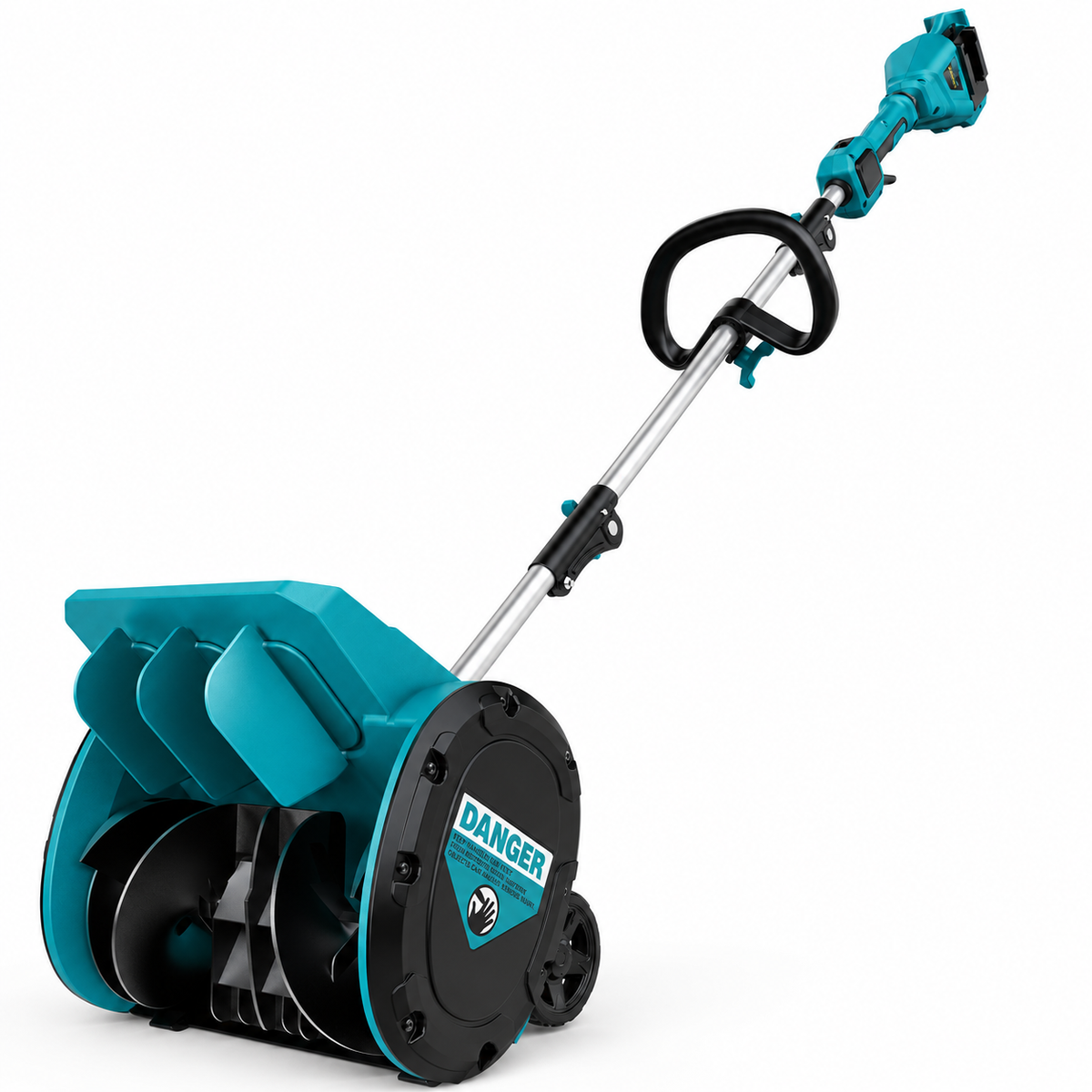
Imagine waking up on a winter morning, looking out the window, and finding your driveway buried under several inches of snow. Your car needs to get out, but the snow is heavy, the temperature is dropping, and grabbing a shovel is the last thing you want to do.
This is where a snow blower comes in handy. But when shopping for one, you might notice something confusing: some machines are called single-stage, while others are two-stage. What does that extra stage actually do? And does it really make a difference?
The answer starts with one important component: the auger.
Meet the Auger: The Snow Blower’s Hardworking Snow Mover

The auger is the rotating, spiral-shaped component at the front of a snow blower. As it spins, it gathers snow and moves it toward the machine’s discharge system.
Think of it like a giant screw designed to move snow instead of driving into wood. Its job is to collect the snow in front of the machine and feed it into the system that throws it away.
But here’s the interesting part: not every snow blower handles the snow in the same way. Some rely on the auger to do almost everything, while others give it a teammate.
That’s the key difference between single-stage and two-stage snow blowers.
1. Single-Stage Snow Blowers: One Component, Two Jobs


A single-stage snow blower keeps things simple. Its auger collects snow and throws it directly through the discharge chute. There’s no separate impeller doing the throwing.
Imagine scooping up snow and tossing it aside in one continuous motion. That’s essentially how a single-stage system works.
Why choose a single-stage snow blower?
-
Lightweight and easy to maneuver: Great for narrow walkways, smaller driveways, and tight spaces.
-
Simple and convenient: Fewer snow-moving components make the design relatively straightforward.
-
Great for everyday snowfall: A good match for many paved areas that receive light to moderate snow.
Many single-stage models use rubber paddles or rubber-edged augers that help clear paved surfaces close to the ground.
Where does it struggle?
When snow gets deep, dense, or heavy and wet, a single-stage machine may have a harder time keeping up. Its snow-handling capacity is generally lower than that of a comparable two-stage machine.
It’s also usually not the right choice for gravel driveways, because the auger can pick up and throw loose stones.
In short: If your usual winter problem is a few inches of snow on a paved driveway, a single-stage snow blower may be all you need.
2. Two-Stage Snow Blowers: The Auger Gets a Teammate


Now imagine the snow is deeper, the driveway is longer, and the snow has become heavy after a few days of winter weather. This is where a two-stage snow blower can make a real difference.
Instead of asking one component to handle everything, a two-stage machine splits the work between two parts:
Stage 1: The auger collects the snow.
The auger gathers snow from the ground and feeds it toward the center of the machine.
Stage 2: The impeller throws the snow.
The impeller is a separate, high-speed, fan-like component. It takes the collected snow and pushes it through the discharge chute, sending it away from the cleared area.
Think of the auger as the worker who gathers the snow and the impeller as the teammate who launches it out of the way. Each has a distinct job, helping the machine handle larger amounts of snow.
Why choose a two-stage snow blower?
-
More capable in heavy snowfall: Generally better suited to deeper accumulations and larger volumes of snow.
-
More effective snow discharge: The separate impeller helps move snow through the chute.
-
Suitable for larger areas: A practical choice for long driveways and demanding winter conditions.
-
More options for different surfaces: Many models can handle gravel or uneven ground when adjusted and operated according to the manufacturer's instructions.
Is there a downside?
Two-stage machines are generally larger, heavier, and more complex than single-stage models. They may also take up more storage space.
And if you only need to clear a short walkway after a light snowfall, that extra capacity might not be necessary.
In short: If winter regularly leaves you with deep snow, large snow piles, or a long driveway to clear, a two-stage machine is worth considering.
3. Single-Stage vs. Two-Stage: The Showdown
So, which one deserves a place in your garage? Here’s a quick side-by-side comparison.

Keep in mind that performance varies with motor power, auger design, clearing width, snow conditions, and the specific model. Two machines with different stage configurations won't necessarily perform the same way in every situation.
4. Does More Stages Always Mean Better Snow Clearing?
Not necessarily! A two-stage snow blower isn't automatically the right choice for everyone.
Picture two homeowners.
Homeowner A has a short, paved walkway and usually gets a few inches of light snow. A compact single-stage snow blower may be easier to handle, quicker to get started with, and simpler to store.
Homeowner B has a long driveway and regularly deals with deep snow after overnight storms. A two-stage snow blower may be better equipped to handle the larger workload.
Neither homeowner needs the same machine. The smartest choice is the one that matches the conditions you actually face.
Before buying, ask yourself three questions:
-
How much snow do I usually get? Occasional light snowfall calls for different capabilities than frequent heavy storms.
-
What surface am I clearing? Paved driveways and gravel surfaces have different requirements.
-
How much ground do I need to cover? A small walkway is a very different job from a long driveway.
Answering these questions can help you avoid paying for capacity you don't need—or choosing a machine that struggles when winter gets serious.
5. What About Three-Stage Snow Blowers?
You may also come across three-stage snow blowers. These machines add another component, usually called an accelerator, to help move snow through the system.
The auger gathers the snow, the accelerator helps feed it toward the impeller, and the impeller discharges it through the chute.
This additional mechanism is designed to improve snow processing in certain conditions. However, more components don't automatically mean a better fit for your property. Your snowfall, driveway size, and budget still matter most.
The Bottom Line: Let Your Winter Decide
The auger might not be the first thing you notice when looking at a snow blower, but it plays a major role in how the machine handles snow.
A single-stage design offers a compact, straightforward solution for many smaller paved areas. A two-stage design adds a separate impeller to help handle larger volumes of snow and more demanding conditions.
Neither is universally better. The right choice depends on how much snow you get, what surface you need to clear, and how much work your driveway demands.
After all, winter is unpredictable enough. Choosing a snow blower that suits your needs can make clearing the driveway a much less daunting part of the season.
Share:
It's Coming Back! Our Snow Blower Returns This October